



Budo is a Japanese concept that literally translates as “the way of the warrior.” It combines such diverse things as fighting techniques and a philosophical system. The latter is based on discipline, respect, harmony, and a constant striving for self-improvement.
The question “What is budo?” encompasses several levels of understanding: cultural, historical, practical, and spiritual. To understand budo, it is not enough to learn sumo techniques. It is essential to change your perspective on how you interact with the world around you.
Origin of the term
The word “budo” consists of two parts.
- The first, “bu,” refers to martial arts, combat, and armed conflict.
- The second, “do,” means path, method, or way of life.
Thus, budo meaning refers primarily to the path that the practitioner follows. A path where every movement and every effort is subordinated to the inner goal of character development and self-control.
The meaning of budo is not limited to training. It is a system that permeates everyday life. In Japanese culture, the concept of “do” includes martial arts (kendo, aikido, judo), tea ceremony (sado), calligraphy (shodo), and flower arrangement (ikebana-do). In all these disciplines, the path is more important than the result. Budo follows the same logic.
The history of budo
The path of budo was formed under interesting historical circumstances. At first, it was a practical necessity for survival and defense. Then budo became a cultural and philosophical response to changes in society. To understand what budo is, it is essential to trace how its content changed from the battlefield to the dojo and then to inner balance.
The Samurai Era
The word “budo” first appeared in the 16th century in the context of describing the samurai way of life. At that time, it referred to the entire system of a warrior’s existence: hierarchy, duties, and code of conduct. The practice of budo was harsh and focused on survival. This is not surprising, since a person skilled in weapons and ready for battle was respected and held a high position. The ability to win in battle was a direct expression of a warrior’s value in feudal society.
The Meiji era
With the beginning of Japan’s modernization in the Meiji era, old military traditions began to be reevaluated. Society was striving for reform, industrial development, and international openness. Against this backdrop, the term “bujutsu” (martial arts) began to lose its relevance. Budo, as a way of personal development, became increasingly important. The shift was fundamental! People moved from the practice of war to the practice of self-development.
One of the principal architects of this shift was Kanō Jigorō, the founder of judo. He rejected the term “jujutsu,” which was associated with fighting techniques, and introduced ‘judo’ (“the gentle way”). In doing so, he set the direction for all modern martial arts.
The philosophy of budo
What distinguishes budo from a sport or self-defense? The answer lies in the value system. Budo is based on the principles of respect for the teacher and partner, restraint, openness to dialogue, patience, and self-observation. Every element of practice is built around the idea of inner balance.
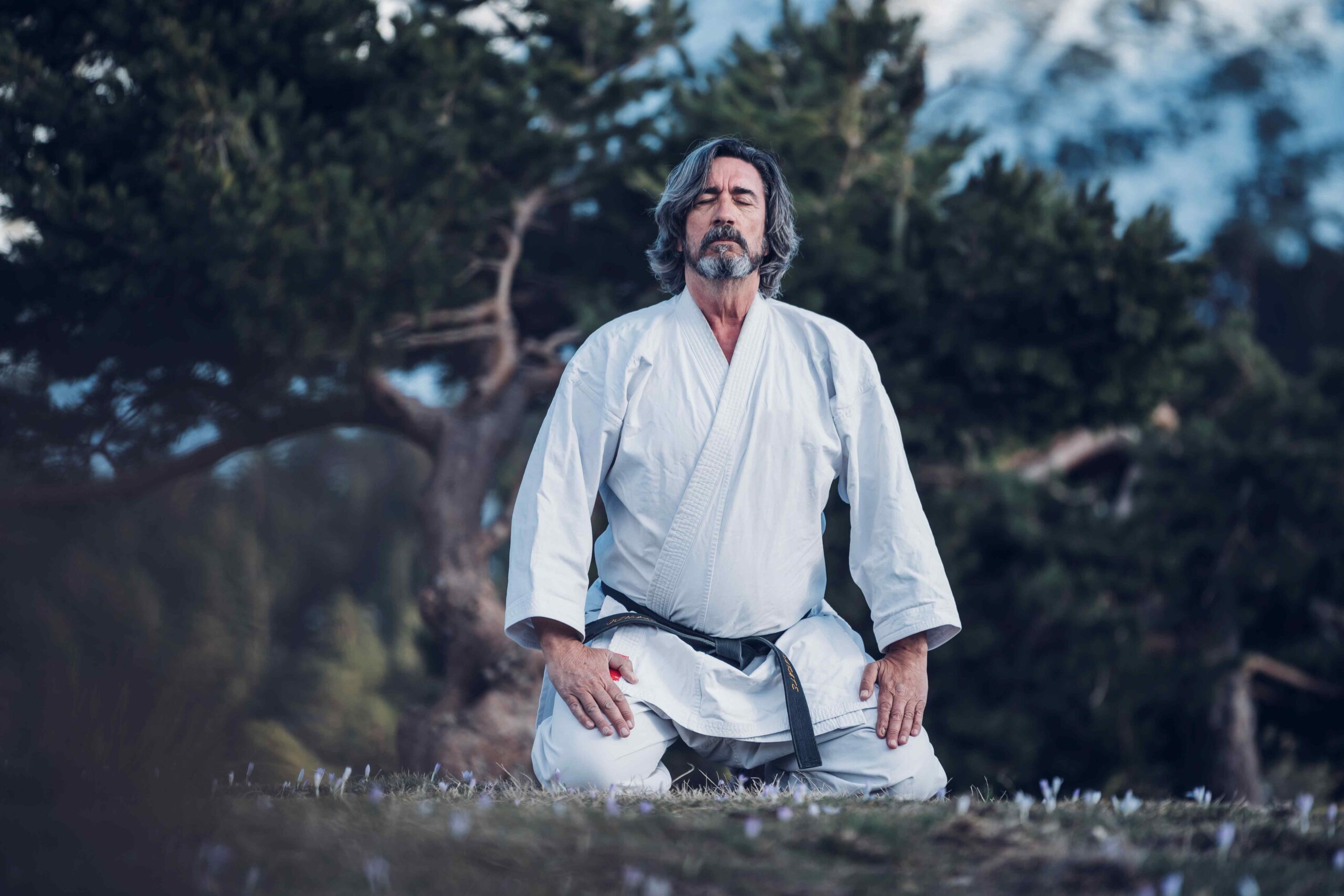
This is also evident in practice. Training in the dojo begins and ends with a bow. The opponent is not perceived as an enemy, but as a training partner. Mistakes are seen as a necessary step on the path to mastery.
The path of budo is a spiral, where each new level returns to what has already been passed, but with a new understanding. If you delve deeply into the philosophy, you can formulate some dogmas: technique and philosophy develop simultaneously; without inner discipline, movements are empty; without practice, ideas are fruitless.
Variety of styles and schools
The concept of budo includes both styles known in the West and less common forms with a deep internal structure. Each direction has its own history, technical base, and pedagogical system. However, the essence and philosophy remain the same.
Among the most famous styles of budo are:
- Judo: the way of gentleness and using the opponent’s strength against them
- Aikido: the art of harmonizing energy in combat
- Karate: a system of striking techniques with an emphasis on internal control
- Kendo: the way of the sword, a modern continuation of samurai fencing
- Iaido: the art of lightning-fast sword drawing and precise action
- Kyudo: the way of the bow, combining physical precision with mental calm
- Jodo: a technique for working with a short wooden stick
- Kudo, Shorinji Kempo, Sumo: less common but no less significant branches
It is important to understand that the practice of budo is not at all about winning. Here we return to the previous section on the philosophy of this movement. The opponent is perceived as a mirror in which inner doubts or fears are reflected. In this sense, budo is a way of encountering oneself.
Budo in the modern world
Today, budo is practiced all over the world. It is included in educational programs, used as a method of corporate training, and applied in psychotherapy and rehabilitation. However, even in these new formats, budo retains its original purpose: to teach people responsibility, balance, control, and respect.
Modern society offers many ways to deal with aggression, stress, and anxiety. Budo offers one of the oldest and most effective. Try to transform external struggle into internal struggle, find a point of balance, and move forward step by step. This is the answer to the question, “What is budo?”
Importantly, budo does not require any special conditions. You can start at any age, regardless of your financial or physical abilities. The main thing is the desire to learn.
Conclusion
Budo is a holistic system that combines movement and thinking. To understand the meaning of budo is to recognize that struggle exists not only on the tatami, but also within each person.
The path of budo offers time-tested answers to difficult life questions and leads to becoming the best version of yourself. This path requires effort, but it yields results that go beyond the gym. On the path of budo, respect, discipline, the ability to listen, and a willingness to change are formed.